As I find videos, books, or methods that are helpful to me in becoming a better ukulele player I will share what I like about them. I will only list things I have tried and found to be helpful. I will not be critiquing things per se. I do not sell these items, but there will be links to a purchase point if you are interested in pursuing the item.
My first recommendation? Get to an ukulele club!

If you are a beginner (or not) find out where there is a local ukulele club and get to it! They are great places for all ukulele players for several reasons.
1) Comaraderie. "Hi, my name is _____, and I play the ukulele!" "Hi _______!" Common interest- it's wonderful.
2) Instruction. People who show up to these clubs have fun and like to help others have fun. That includes teaching each other with tips on playing like: "How do you play that E chord", "How do you play that rhythm?" You will be both the teacher and the student to someone.
3) Uke selection. You may live in an area where music stores are few and far between and uke selection is nill. I have never met anyone at a uke club who wasn't willing to let you test theirs.
4) Music variety. Many clubs give opportunity to learn new songs. For instance I gravitate towards tin pan alley. At uke club we play that and country, rock, whatever people like to share. It keeps me from getting into a big rut.
5) Opportunity. Many clubs have a core group that likes to perform for others and some have an open mic time. Give them a try. "I could never do that" turns into "that was fun!"
These are just a few reasons to find and participate in an ukulele club. You can find some uke clubs here and here. If there are none listed near you, just google ukulele club or ukulele players and your state or area name and you may find one. Of course Ukulele Festivals are an ukulele club on steroids- I definitely find them worth a several hour drive and an overnight stay.
1) Comaraderie. "Hi, my name is _____, and I play the ukulele!" "Hi _______!" Common interest- it's wonderful.
2) Instruction. People who show up to these clubs have fun and like to help others have fun. That includes teaching each other with tips on playing like: "How do you play that E chord", "How do you play that rhythm?" You will be both the teacher and the student to someone.
3) Uke selection. You may live in an area where music stores are few and far between and uke selection is nill. I have never met anyone at a uke club who wasn't willing to let you test theirs.
4) Music variety. Many clubs give opportunity to learn new songs. For instance I gravitate towards tin pan alley. At uke club we play that and country, rock, whatever people like to share. It keeps me from getting into a big rut.
5) Opportunity. Many clubs have a core group that likes to perform for others and some have an open mic time. Give them a try. "I could never do that" turns into "that was fun!"
These are just a few reasons to find and participate in an ukulele club. You can find some uke clubs here and here. If there are none listed near you, just google ukulele club or ukulele players and your state or area name and you may find one. Of course Ukulele Festivals are an ukulele club on steroids- I definitely find them worth a several hour drive and an overnight stay.
You need a go to chord book!
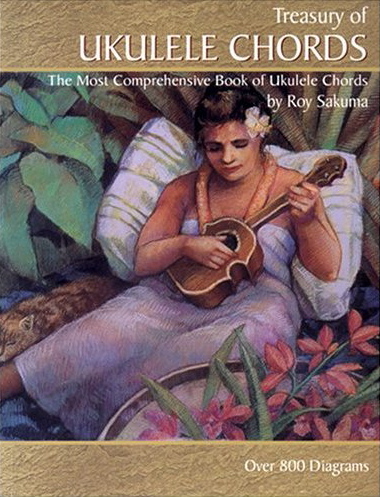
When you are on-line with your computer
or your "smart device" you may have
quick access to ukulele chords, but you may not
be able to see as many on a page as you can in
this book. I think it is the most comprehensive ukulele chord book that there is.
Here is one place you can find them for sale.
Change Your Strings-
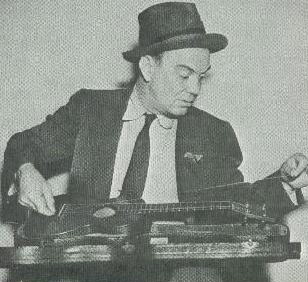
Cliff Edwards aka Ukulele Ike knew the value of changing strings. Here are some things I have learned about changing strings.
1) If you have played your uke for six months and you think your ukulele still sounds good- you will probably think it sounds better after you change the strings. Strings do wear out from age as well as the oils in your hands.
2) If you like the brand of strings you have on the uke- you don't have to change brands. “Keep it simple” or “If it ain’t broke don’t fix it!”
3) If you want to experiment and change brands ask your friends what kind they like and why, but getting advice still doesn’t mean you will like them. You may not like the tension, texture or sound. I have had a few times that certain sets were changed out in two days because they drove my ears crazy.
4) The same brands of strings may sound different on different ukes- one reason being the kind of wood the uke is made of. You may like one brand of strings on one uke and not on another because of construction. The wood responds to the vibrating strings and wood is not all the same.
5) Your playing style may help decide the strings you prefer. Certain brands and sizes seem to respond better to finger picking than strumming or vice versa.
6) Changing strings is not hard. (Here is a video to show you how.)
1) If you have played your uke for six months and you think your ukulele still sounds good- you will probably think it sounds better after you change the strings. Strings do wear out from age as well as the oils in your hands.
2) If you like the brand of strings you have on the uke- you don't have to change brands. “Keep it simple” or “If it ain’t broke don’t fix it!”
3) If you want to experiment and change brands ask your friends what kind they like and why, but getting advice still doesn’t mean you will like them. You may not like the tension, texture or sound. I have had a few times that certain sets were changed out in two days because they drove my ears crazy.
4) The same brands of strings may sound different on different ukes- one reason being the kind of wood the uke is made of. You may like one brand of strings on one uke and not on another because of construction. The wood responds to the vibrating strings and wood is not all the same.
5) Your playing style may help decide the strings you prefer. Certain brands and sizes seem to respond better to finger picking than strumming or vice versa.
6) Changing strings is not hard. (Here is a video to show you how.)
An essential strumming video....

I acquired this DVD shortly after it's release in 2005. Ralph Shaw demonstrates 12 different strumming patterns on this instructional DVD. He does a thorough job of demonstrating each pattern and has a play along song for you to practice the strum. Included with the DVD is a little practice booklet for you to work with as well as a chord chart. The DVD is well produced and uses a split screen close-up on his hands when needed.
Here is how I used it:
First I watched the DVD and played along straight through in one sitting.
Then on separate days I would watch one chapter and take that strum and go through my whole book of music. You know- that collection of your favorite songs you have. I used that strum and played all of my songs. Some of the songs sounded great. Some terrible. Some sounded totally different, but cool.
Then I would watch the next chapter and take that strum and go through all of my songs.
This exercise helped me in a few ways. 1) It helped me hear the songs fresh with new rhythms. 2) It helped me break away from my "default" strum - that strum we get into a habit of playing. 3) I could also hear how rhythm could change a feeling of the song.
Do I have all the strums memorized? No, but it would be a good thing to try to do. I know this DVD helped me become creative with my strumming- to take each song I play and put my stamp on it creatively.
Interested? Check out Ralph's site....... http://www.ralphshaw.ca/
Here is how I used it:
First I watched the DVD and played along straight through in one sitting.
Then on separate days I would watch one chapter and take that strum and go through my whole book of music. You know- that collection of your favorite songs you have. I used that strum and played all of my songs. Some of the songs sounded great. Some terrible. Some sounded totally different, but cool.
Then I would watch the next chapter and take that strum and go through all of my songs.
This exercise helped me in a few ways. 1) It helped me hear the songs fresh with new rhythms. 2) It helped me break away from my "default" strum - that strum we get into a habit of playing. 3) I could also hear how rhythm could change a feeling of the song.
Do I have all the strums memorized? No, but it would be a good thing to try to do. I know this DVD helped me become creative with my strumming- to take each song I play and put my stamp on it creatively.
Interested? Check out Ralph's site....... http://www.ralphshaw.ca/
Do you want to Play ukulele by Ear?

At the time of writing this I have had this DVD for only a couple weeks and I've watched it twice. The title of this DVD is "Play Ukulele By Ear" and that is exactly what Jim D'Ville teaches us to do. As we all know there is no quick way to do anything, so if you are hoping to watch this DVD once and be able to jam free style with others when you are currently a strummer - it ain't gonna happen. If you know that learning anything takes a little time, this is a great place to start.
Before watching this DVD I thought I understood the power of my ears, but I have been reminded I need to rely on them more as a tool in making music.
I also learned how to use my hand as a sort of musical calculator. Jim demonstrates how to figure out what notes are in a chord and how to calculate which three chords go together if you want to play a song in a different key. We have a literal five fingered circle of 5ths at the end of our arms. His method gives me hope of understanding basic music theory.
Now if you think you know all of this stuff and you are teaching others you should watch and study Jim's teaching style. He doesn't speak over his audience or make them feel dumb. He clearly and concisely shares his ideas. The DVD doesn't show his audience, but it could be kids or adults.
This is a short DVD at only 52 minutes- it leaves you wanting more. I imagine his classes in person must do that same thing. I will watch this several more times and I know I will learn something each time.
If you are interested in this DVD go to Jim's blog: http://playukulelebyear.blogspot.com/
By the way, Jim has lessons on his blogspot. It makes me wish I had more time to dedicate to learning all of it!
Before watching this DVD I thought I understood the power of my ears, but I have been reminded I need to rely on them more as a tool in making music.
I also learned how to use my hand as a sort of musical calculator. Jim demonstrates how to figure out what notes are in a chord and how to calculate which three chords go together if you want to play a song in a different key. We have a literal five fingered circle of 5ths at the end of our arms. His method gives me hope of understanding basic music theory.
Now if you think you know all of this stuff and you are teaching others you should watch and study Jim's teaching style. He doesn't speak over his audience or make them feel dumb. He clearly and concisely shares his ideas. The DVD doesn't show his audience, but it could be kids or adults.
This is a short DVD at only 52 minutes- it leaves you wanting more. I imagine his classes in person must do that same thing. I will watch this several more times and I know I will learn something each time.
If you are interested in this DVD go to Jim's blog: http://playukulelebyear.blogspot.com/
By the way, Jim has lessons on his blogspot. It makes me wish I had more time to dedicate to learning all of it!
Need help working up the fretboard?

Written by Fred Sokolow and Jim Beloff "Ukulele Fretboard Roadmaps" starts you out on the journey to see the patterns the exist up the fretboard. It helps you take your uke playing to the next level by showing you the moveable chord shapes and chord progressions. This is another book I have that I nibble at. Some times you can look at a book and think "I will never understand this stuff!" You will be able to understand with this book if you take your time. This is a book you will want to get, skim, and then study it from the beginning swallowing small bits at a time. I take a bit of knowledge, put it to work and then go back for more. It is arranged for GCEA-tuned ukuleles so be aware of that when you are buying it, although the principles could be applied on all ukulele tunings. A CD comes with the book so that you can hear what you are supposed to be learning too. If you are interested in this book you can buy it at the Flea Market Music Store.
From under your fingers and into your ears.....
This is Jim D'Villes DVD "Play Ukulele By Ear Vol. 2: Chord Progressions & The Circle of 5ths". Vol.1 is not a prerequisite to watch this one, but I am glad to have seen both. The main lesson in this DVD is to focus on hearing chord progressions. Jim tells us to take these chord progressions "from under our fingers and into our ears". He also has helpful lessons on how to use the circle of 5ths which is especially useful in transposing. Before I got this DVD I had been doing some of the things Jim teaches, but once again, his concise teaching style helped me clear up in my mind what I was doing. You are able to purchase a downloadable copy from Jim's blog here or purchase an actual DVD copy through the Flea Market Music Store as I did.