I feel extremely blessed to have the ukuleles I own. I get asked a lot of questions about them and I added this page to let you know what kind I play and why.
First off, a bit of my history: My first ukulele to purchase, when I was about twelve, was a soprano. It is a bad sounding uke I paid $17.00 for and I still own, but never play. When I became more serious about playing ukulele 30+ years later I bought a couple other inexpensive ukes including an older Harmony sunburst with the plastic fretboard. About that time the Fluke ukulele was invented and I bought one...
First off, a bit of my history: My first ukulele to purchase, when I was about twelve, was a soprano. It is a bad sounding uke I paid $17.00 for and I still own, but never play. When I became more serious about playing ukulele 30+ years later I bought a couple other inexpensive ukes including an older Harmony sunburst with the plastic fretboard. About that time the Fluke ukulele was invented and I bought one...
"Abstract" design Fluke-
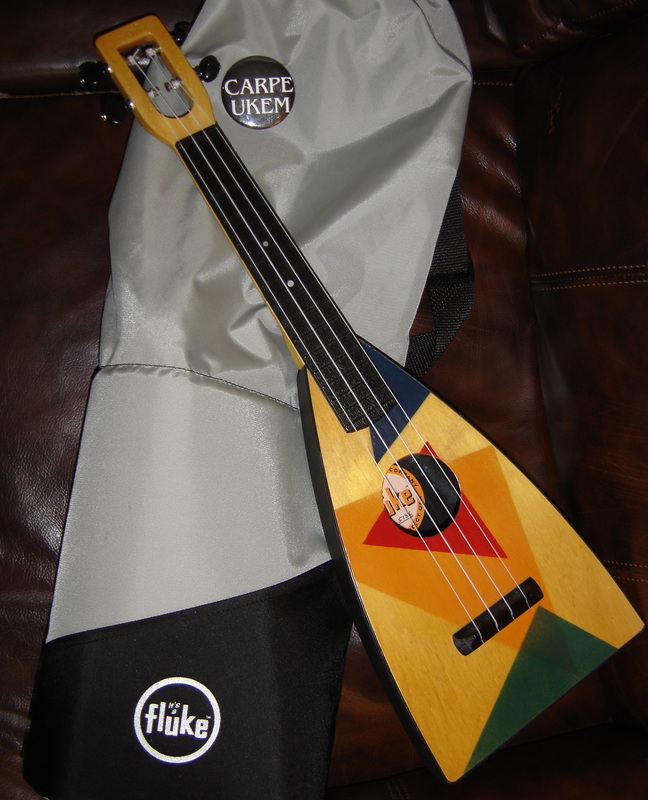
I bought this Fluke without ever having been able to try one first. They were getting rave reviews on the internet and I have never regretted its purchase. It was my first good sounding ukulele and helped me progress in my playing. A good sounding ukulele is an invaluable tool in your playing progress. The Fluke is considered a concert scale, but it is a tad longer scale than most concert size ukuleles. If you want more info on this ukulele you can read about them here.
After owning the Fluke I thought I was a concert size player for life.
The top picture shows my first Fluke. After owning it for about 13 years the bridge popped off damaging the top. I sent it to the Magic Fluke Company and they replaced the original abstract design with the new version. I believe the fingerboard was replaced too- it's pretty much a brand new uke again. If you're not familiar with them- get familiar with them!
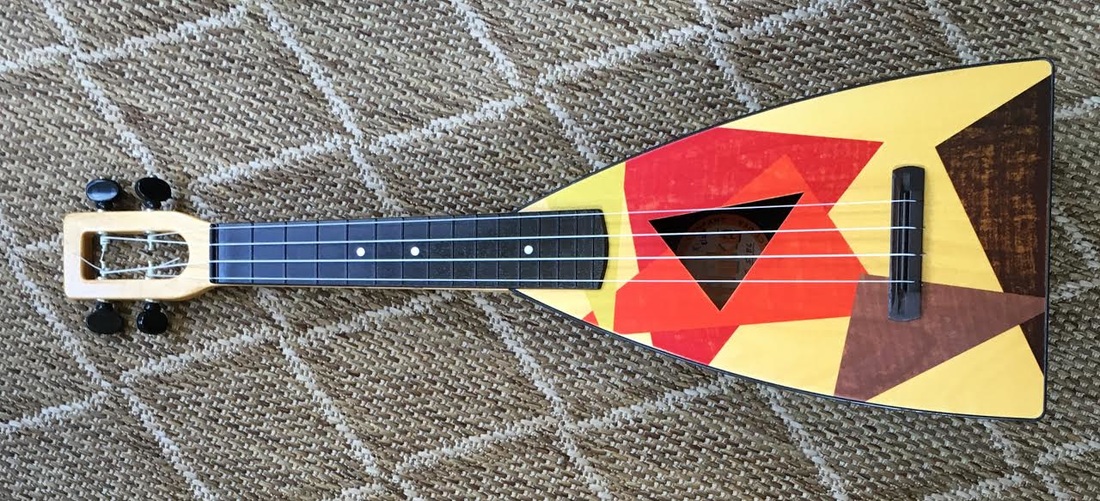
"Tiki" Flea-

I wanted a durable ukulele to use at work and after owning a Fluke I knew how nearly indestructible they were. The Flea is the soprano model with a 14" scale. I fell in love with the scale size which is a bit longer than a traditional soprano. I bought this third hand from a man who had tried to fix a crack in the plastic back by melting it with a soldering iron. I used super glue and it has worked great. You can see more Fleas by clicking here.
My Honey-
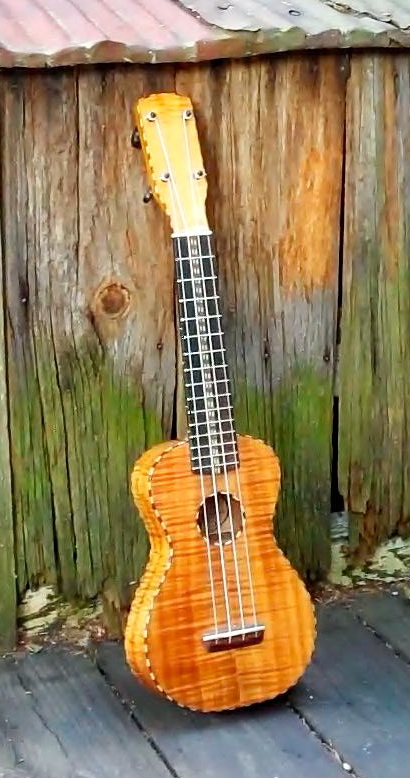
I don't name all of my ukuleles, but some seem to ask to be named. When I opened the case to this uke for the very first time, I heard a whisper. Maybe the voice wasn't hers, but the name stuck...
Some people tend to think custom built ukuleles are out of touch for the average person. My advice is to keep an envelope or jar for birthday money and/or loose change... it's worth it.
This Kepasa Josephine model was made for me in 2008 and is made of Koa wood. It is bound on the front and back as well as the headstock. The fret board sports a chevron style inlay and has side markers. It has Peghed tuners and is very light. The Josephine model has a 14" scale (same as the Flea) and mine is 1.5" wide at the nut (same as the Flea). For more info on the Kepasa ukulele specs check out their website and tell them Ukester Brown sent you- Kevin builds a nice ukulele. This is my go-to uke!
My Ruby-
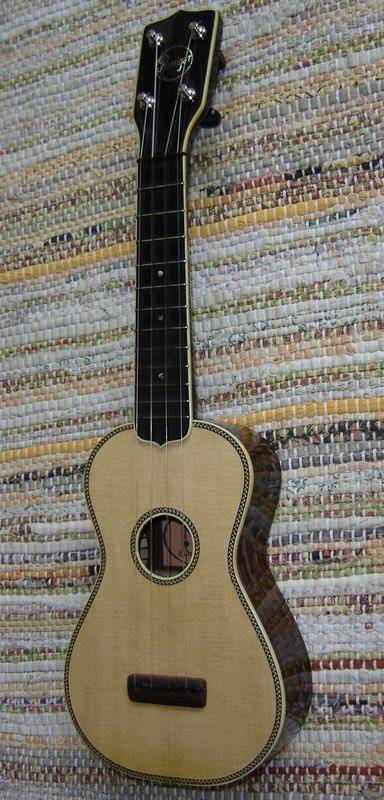
About a year after having my Josephine "Honey" built, I bought a book called Vintage Ukuleles: The Tony Ku Collection by Isami Uchizaki. It is filled with wonderful photos of vintage ukuleles. Page 132 shows a Regal ukulele described as, "Spruce top; rosewood back, sides, and neck; white celluloid binding around top, back, sound hole, fingerboard, and face plate; rosewood fingerboard; abalone "Regal" logo on the face plate; circa 1930s." At the very least, I was inspired...
Pleased with my first Kepasa I contacted Kevin again and we started emailing back and forth on this project. We made some changes such as: 1) using ebony on the face plate and fingerboard 2) instead of "Regal" it says "Remiger" (my last name) in the same script as the "Regal" logo 3) we used an ivory color binding on the top only instead of white. We only had one photo to work with, similar to how mine is posed. I think Kevin caught what I was hoping for.
This uke is heavier than my first Josephine, but that is due to wood and tuner choices in order to emulate the vintage Regal. It is bright sounding with a nice long sustain.
Agatha-
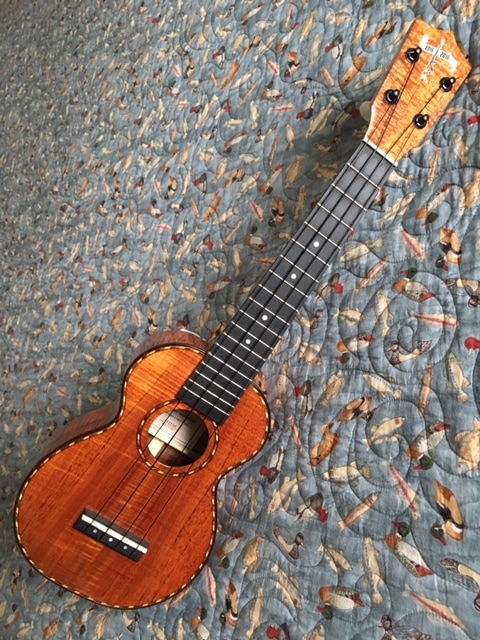
This is a long neck soprano ukulele made by Kamaka. Long neck in this instance being a concert scale on a soprano body. It was made during their centennial with the centennial logo on the headstock. It is also their "DeLuxe" model with the rope binding and ebony fingerboard and bridge.
I got this uke at a private shop in which I was able to trade a Martin soprano that I rarely played and paid some cash for the balance.
Fremont black medium strings have made this sound great-
My Martaferrin
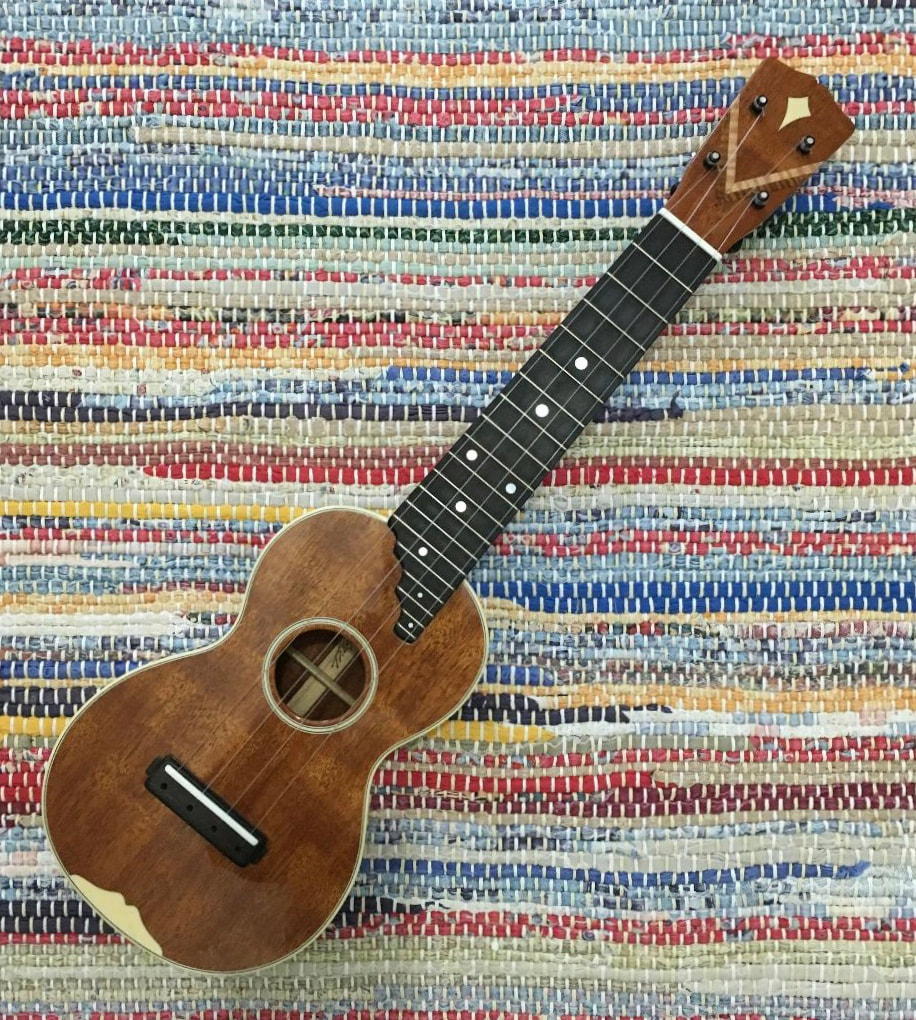
At the urging of my bride this was a gift to myself after retiring from UPS after 34 years of service. It is a beautifully made instrument by Dave Talsma inspired by the vintage Martin 03 and elements from the Maccaferri Islander, hence the "Martaferrin". It is quilted mahogany with ebony fingerboard and saddle. It has peghed tuners and actual pieces of Maccaferri plastic used in the build. It sounds wonderful. If you'd like to see a video of me go all ukulele nerd over it CLICK HERE.
Firefly banjo ukulele-
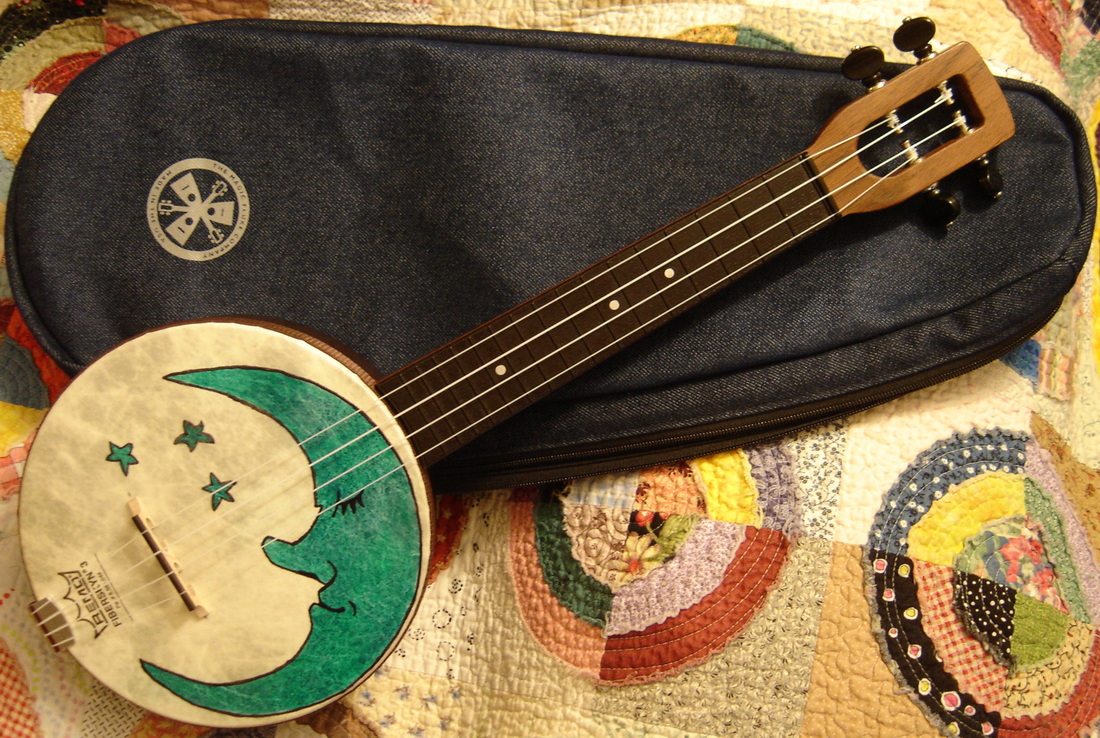
I have to be honest and say I am not usually a fan of playing banjo ukuleles. When I play one the tone sounds too harsh to my ear- I think due to my tinnitus. After having the opportunity to play one of these Firefly banjo ukuleles I liked it so much that I sold a vintage banjo ukulele that was pretty to look at, but rarely played because it bothered my ear. One thing that is nice about the Firefly is that I can control the volume more because of the open back. It is also amazingly light. Some people don't like the polycarbonate fret board, but there is a rosewood upgrade available. As you can tell by now, I like instruments that are made by The Magic Fluke company and you can read more about the Firefly by clicking here.
I applied the moon and stars graphic using sharpie markers and two very light coats of polyurethane spray to keep it from rubbing off.
Sweet Loretta
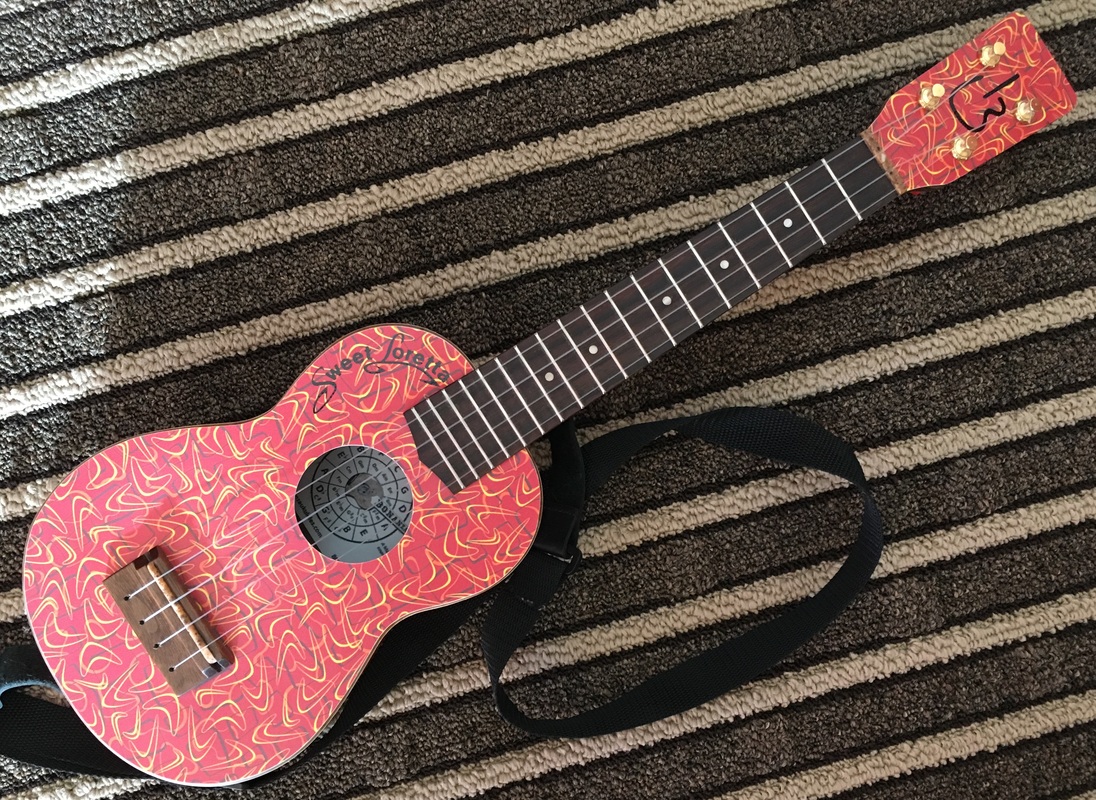
This uke is made by Pete Mai
from Minnesota and what makes it so unique is it is made of a product called Wilsonart which is a countertop product similar to formica. There are over 400 patterns to chose from!
"Loretta" is a long necked soprano which is a concert scale neck with a soprano size body. She has a passive pickup and is the only uke I have with a strap so I can go hands free which is handy while teaching, etc.
A baritone named Mrs. Warren
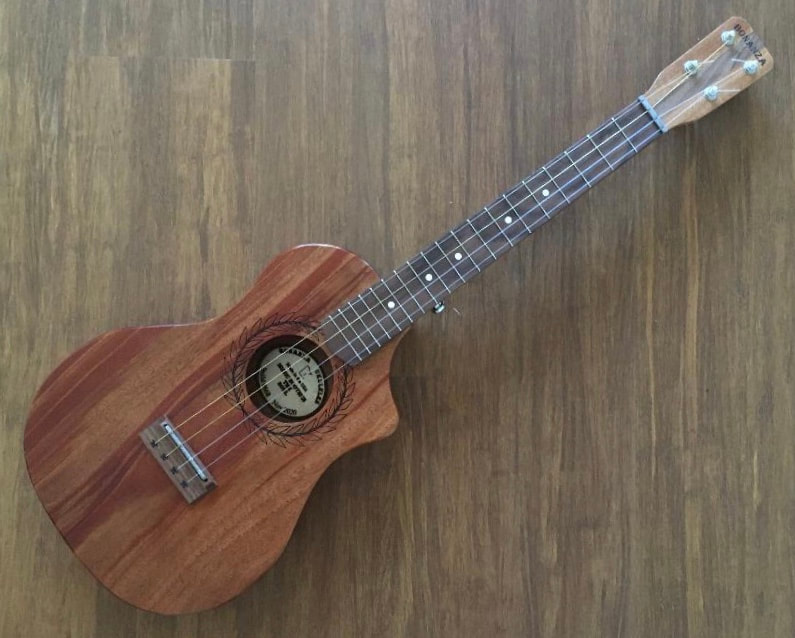
When my desire for a really nice baritone kicked in I ordered this custom from my friends Pete & Shelley of Bonanza Ukuleles in northern Minnesota. It's mahogany with
walnut accents, walnut fingerboard and
bridge and corian nut and saddle. It also has the geared planetary tuners. The grain color is very dramatic and it sounds absolutely lovely.
Some Assembly Required...

This is my cigar box ukulele. I assembled it from a neck and fret board assembly from Mainland Ukulele and a Cohiba cigar box. Choosing a better grade cigar box allowed me to actually do less work in this construction. I think the box is all mahogany and that meant instead of removing the box bottom for a new sound board all I had to do was sand it thin enough to make a good vibration. I drew a line all around he edge of the box bottom and then sanded it thin with my belt sander. I'm quite happy with the results. I can still open the box. The custom case was made from burlap coffee bags from a local coffee shop and has a quilted fabric lining. I did most of the work, but my beloved provided technical assistance. You can see more about it on this video.
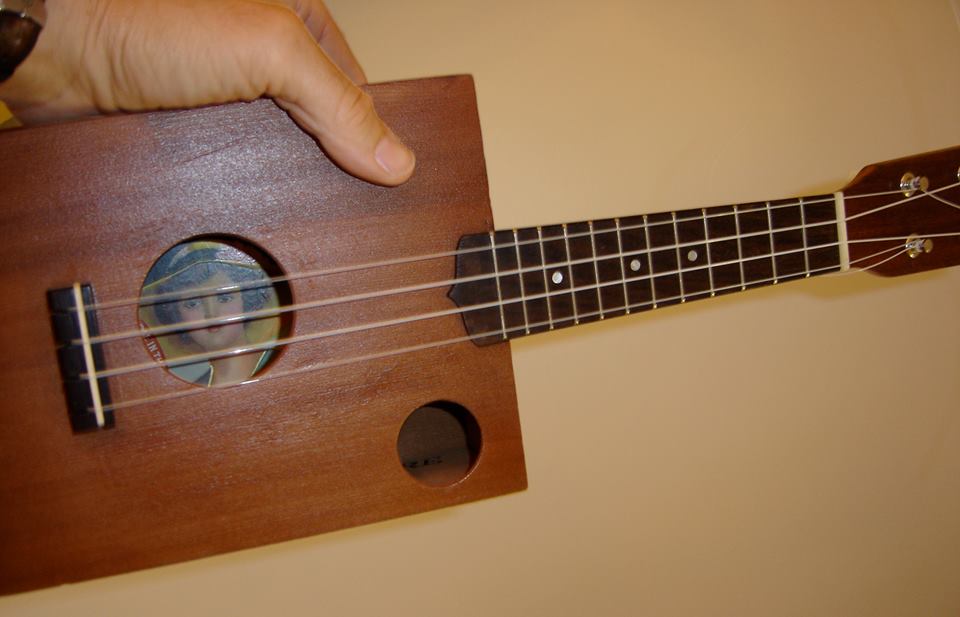
Here is my latest cigar box uke. It is made with a sopranino neck from a badly damaged Ohana uke. The cigar box is a vintage red cedar Aurelia box. Made with the same techique as my Cohiba uke. I set the sound hole off center so the beauty inside could peek out.